
Honda Electric Shift vs. DCT: Same Buttons, Completely Different Transmission
Products · October 29, 2026 · Honda of Lafayette
Why some longtime Honda owners remember early electric-shift problems — and why today's dual-clutch transmissions deserve a fresh look.
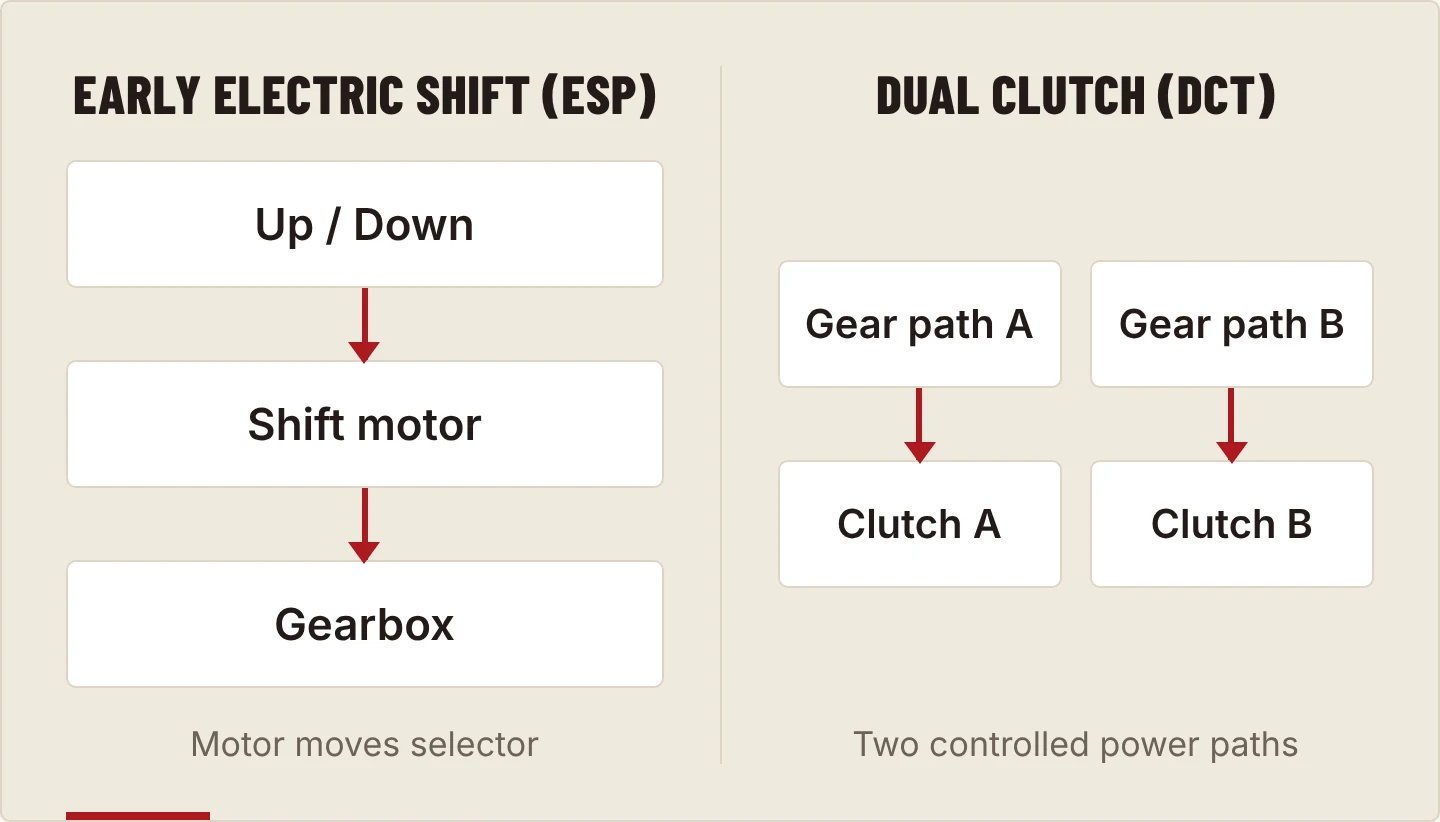
If you've been riding Honda ATVs for a long time, you've probably heard somebody say it: “I don't want one of those electric-shift Hondas. I had one years ago, and it gave me nothing but trouble.” And we understand. At Honda of Lafayette, we remember those earlier Electric Shift Program (ESP) models, and we understand why some owners developed a strong preference for a traditional foot shifter. But the buttons on today's DCT-equipped Hondas can look familiar while hiding very different technology.
Honda's Dual Clutch Transmission (DCT) is not simply an updated version of the old ESP system. Here's how each works, what sometimes went wrong with early electric shift, and what two clutches change.
How the original Electric Shift Program worked
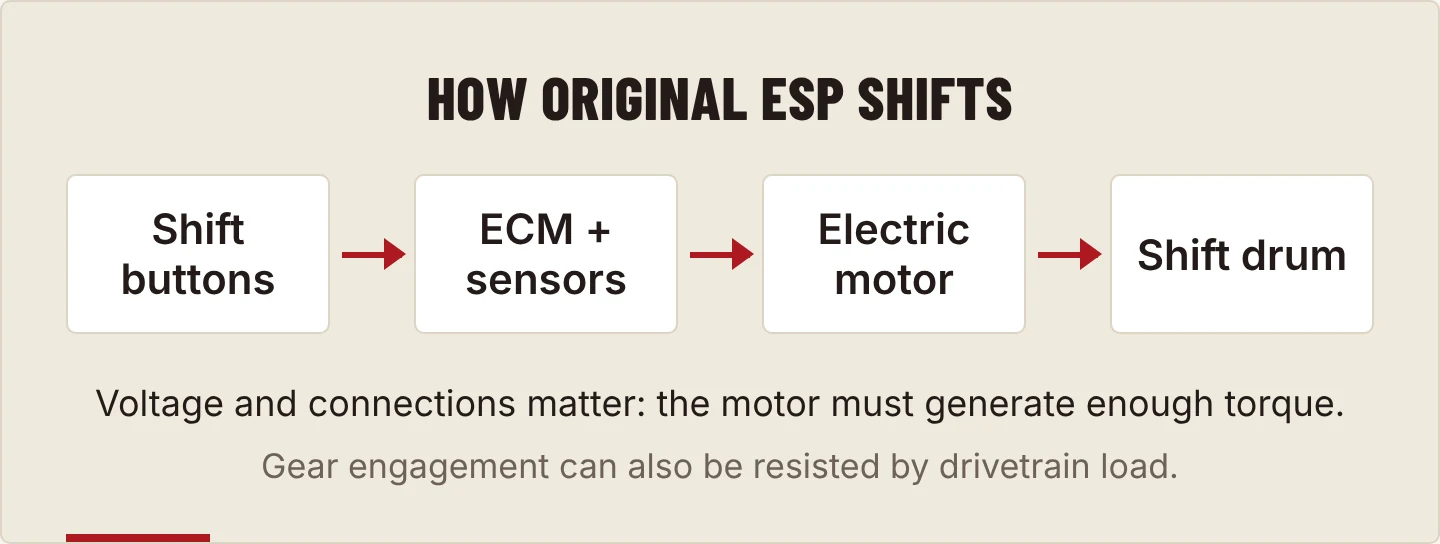
Honda introduced ESP on the FourTrax Foreman for the 1998 model year. The idea was straightforward: keep a conventional sequential gearbox but replace the rider's foot-shifting action with a pair of buttons on the left handlebar. When you pressed upshift or downshift, an electronic controller checked the appropriate inputs and commanded an electric shift motor. Through reduction gears, the motor turned the shift mechanism; the shift drum and forks then moved the gearbox into the requested gear.
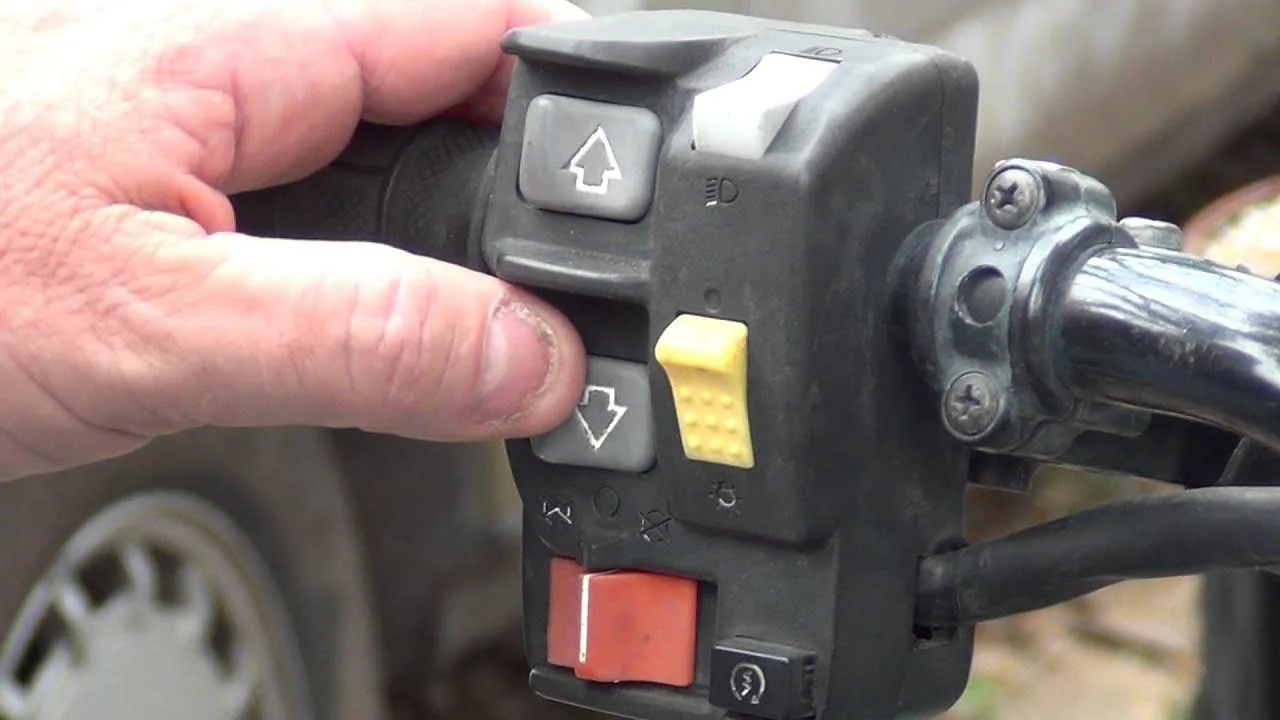
Put simply, ESP was a manual-style transmission with an electrically operated shifter. The rider still decided when to change gears. There was no second clutch preparing the next ratio and no fully automatic shifting like you get with DCT.
Why early electric shift left a bad taste
The original ESP depended on several electrical and mechanical parts working together: switches, sensors, the control unit, wiring, the shift motor and the mechanical gear-selection components. A problem anywhere in that chain could prevent a shift. And because the motor was doing real mechanical work, it needed adequate power and torque — not merely a signal from the button.
Low voltage at the shift motor could contribute to a failed or incomplete shift. A weak battery under certain conditions, poor ground, corroded connector, charging problem or excessive resistance could reduce the power available to the motor. However, the system was designed to shift with the engine running; a battery that was low by itself did not necessarily mean ESP would stop working. Proper diagnosis mattered.
There was also the gearbox itself. A sequential transmission can resist shifting when drivetrain load or gear alignment prevents engagement. Occasionally unloading the drivetrain or moving the ATV slightly could help. These experiences were frustrating for some owners, even though many other ESP Hondas ran reliably for years. It makes sense that a bad experience could stick with someone.
DCT is a different kind of transmission
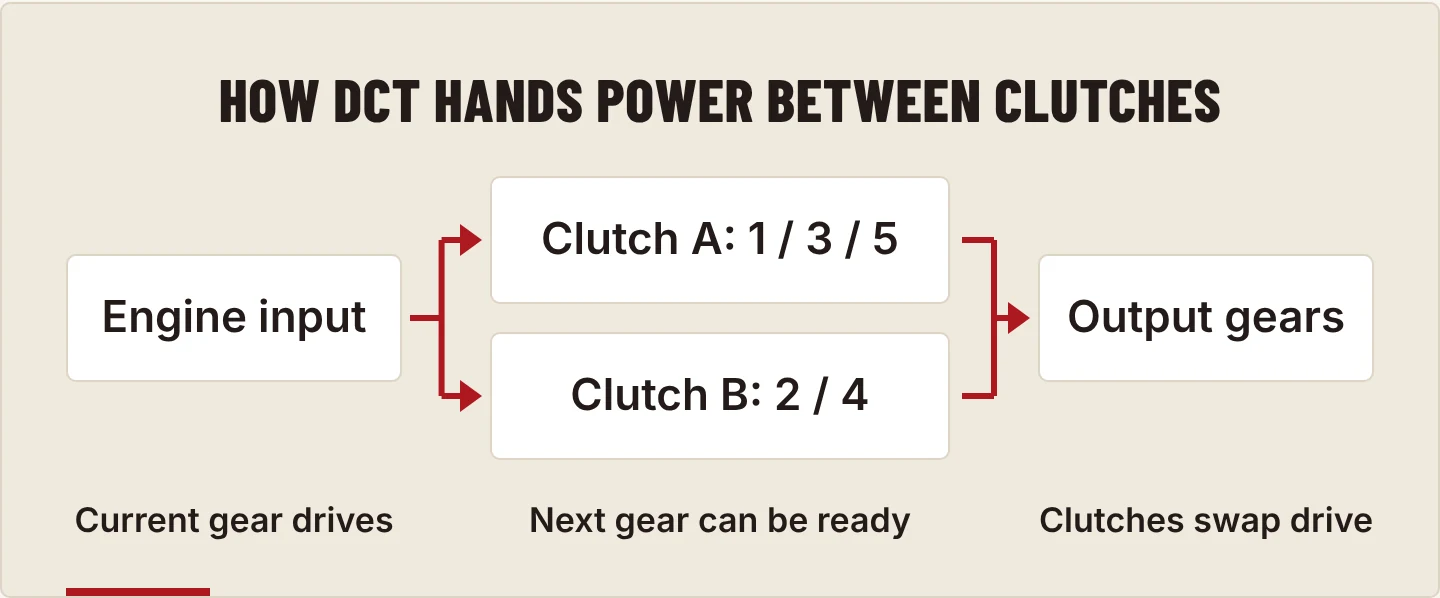
Honda introduced DCT to its ATV lineup for the 2009 model year. Rather than merely automating a foot shifter, Honda designed a transmission that coordinates gear selection and clutch engagement. DCT can choose when to shift in automatic mode, or respond to the rider's gear requests in manual mode.
On Honda's five-speed ATV DCT, one clutch serves first, third and fifth gears; the other serves second and fourth. That arrangement lets the transmission select the next gear on the inactive gear path while the current clutch continues driving. When it's time to shift, the control system coordinates one clutch releasing and the other engaging. This handoff helps keep shifts quick, smooth and direct.
DCT is not a belt-driven continuously variable transmission (CVT). It uses real gear ratios and clutches, preserving the direct mechanical drive that many Honda riders prefer.
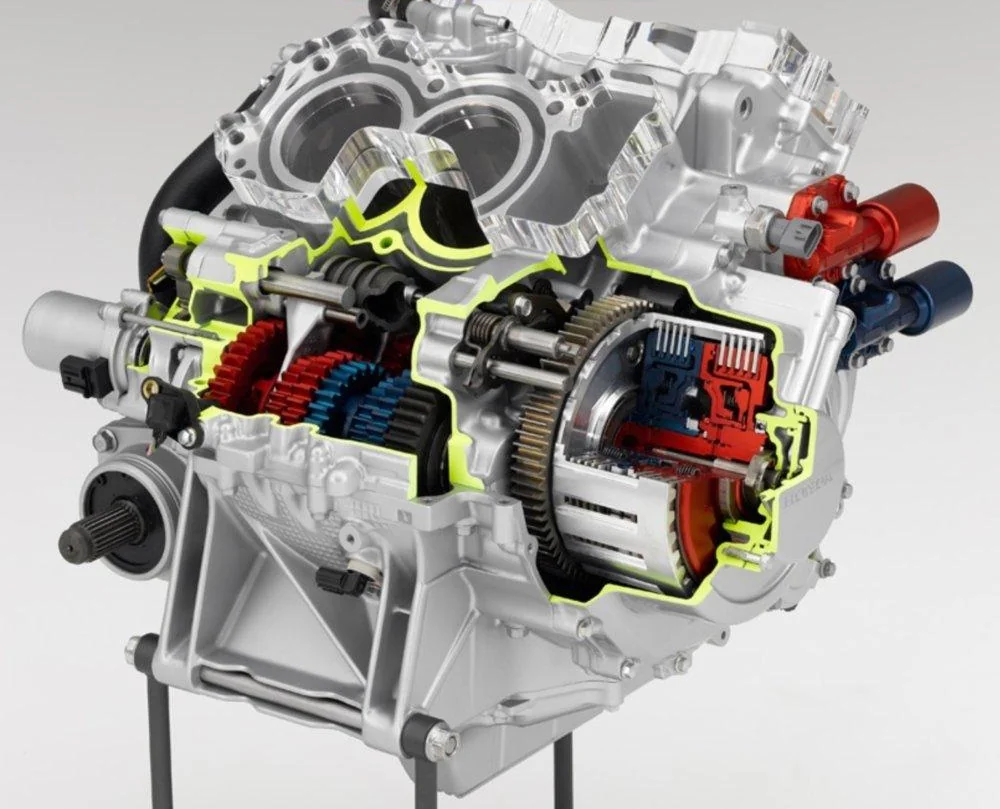
Does a DCT still use a shift motor and electronics?
Yes. A DCT still relies on electronic controls, sensors and a motorized gear-selection mechanism, along with electro-hydraulic clutch controls. We think that distinction is worth explaining rather than pretending electricity disappeared. With ESP, the motor largely substituted for the rider's foot on a conventional sequential transmission. With DCT, gear selection and operation of two clutches are coordinated as an integrated system that can anticipate and manage shifts.
No electronically controlled transmission is immune to electrical faults, worn components or neglected maintenance. The point is that an ESP failure on an older ATV does not tell you how a modern DCT will behave. They have fundamentally different designs.
Automatic convenience, with manual control available
On a DCT-equipped Honda, automatic mode handles normal upshifts and downshifts for you. Prefer to select gears yourself? Choose manual mode and use the handlebar controls. Depending on the model, you can also request a gear change while in automatic mode. That flexibility is useful for trail riding, descents and work around the property.
Where you'll find DCT today
For the 2026 model year, select FourTrax Rancher and FourTrax Foreman Rubicon models offer Honda's five-speed automatic DCT. The Rubicon also brings a selectable low-range subtransmission for demanding work and terrain. Honda's Pioneer 1000 side-by-sides use a six-speed DCT tailored to their larger engine and application. Not every Honda with shift buttons has DCT, so it pays to check the exact model and trim.
Before you write off another push-button Honda
If an older Rancher or Foreman once refused to shift when you needed it, we understand the hesitation. But handlebar buttons only show you how you communicate with the transmission — not how the transmission works inside. Today's Honda DCT is an entirely different approach to changing gears, and it deserves to be judged on its own merits.
Come see us at Honda of Lafayette. We'll walk you through the differences, help you compare foot-shift, ESP and DCT-equipped models, and find the Honda that fits the way you ride.