
Soichiro Honda and Takeo Fujisawa: The Partnership That Built Honda
Industry · November 4, 2026 · Honda of Lafayette
Soichiro Honda built the machines. Takeo Fujisawa built the company that sold them. The story of the partnership behind Honda.
Most people know the name Soichiro Honda. His name is on motorcycles, automobiles, generators, engines and dealerships around the world. His story—the mechanic, racer, inventor and relentless engineer who built one of Japan's great industrial companies—is inseparable from Honda itself.
But there was another man standing beside him. His name was Takeo Fujisawa.
Fujisawa wasn't an engineer. He didn't design engines, and his name never appeared on a motorcycle. Today, most Honda owners have never heard of him. Yet Honda as we know it may not have existed without him.
The story of early Honda is really the story of two very different men who understood exactly what the other could do—and, just as importantly, where each man's authority should end.
Two Lives Changed by the Same Earthquake
Long before they met, Soichiro Honda and Takeo Fujisawa had something unusual in common: both were profoundly affected by the Great Kantō Earthquake of 1923.
Honda was sixteen years old and working as an apprentice at an automobile repair shop in Tokyo. He had spent months doing menial work and had barely been allowed near the cars he desperately wanted to understand. The earthquake changed that. With much of the experienced staff gone in the aftermath, the young apprentice was suddenly given responsibilities he would never have received otherwise. In the chaos following the disaster, Honda drove an automobile for the first time.
Across the same city, twelve-year-old Takeo Fujisawa watched the earthquake destroy the small publicity business that supported his family. The business never truly recovered, and Fujisawa eventually left school to work. Among his early jobs was the painfully repetitive task of addressing envelopes by hand for money.
It seemed insignificant at the time. Nearly thirty years later, that experience would help change Honda forever.
Honda Could Build. But Honda Needed Someone Who Could Sell.
Honda Motor Co. was incorporated in 1948, emerging from Soichiro Honda's postwar experiments with small engines and motorized bicycles. Honda could make things. That was never the problem.
He was an extraordinary mechanic and engineer with enormous ambitions for what his company could become. What the young business lacked was a strong sales network, financial discipline and an organization capable of keeping pace with its founder.
Then, in August 1949, Soichiro Honda met Takeo Fujisawa.
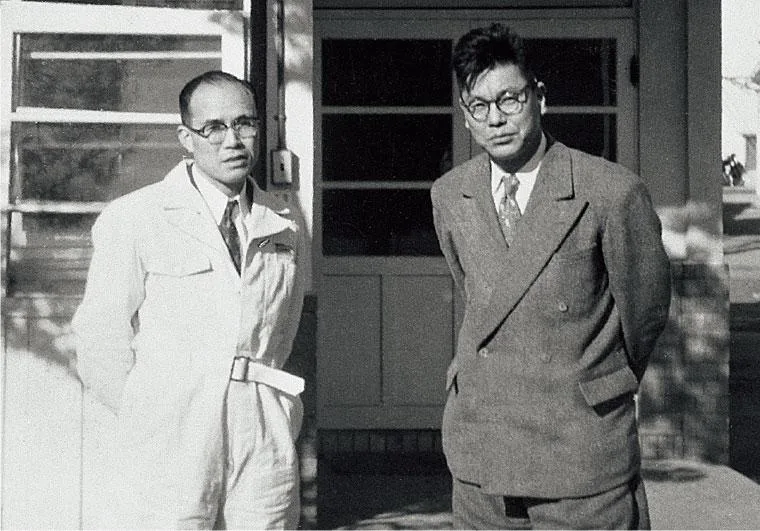
The two men were almost opposites. Honda was the engineer; Fujisawa was the businessman. Honda understood machines, while Fujisawa understood people, markets, money and organizations. They later described their relationship in remarkably simple terms: each man possessed something the other didn't.
Fujisawa joined Honda that October, and the division of responsibility that followed would define the company for more than two decades. Soichiro handled the machines. Fujisawa handled the money, the selling, the organization and the broader structure of the company.
According to Fujisawa's recollection, Honda even handed him the company seal—the symbol of authority needed to conduct major company business. There was no elaborate contract defining their relationship. There was simply trust.
For their first few years together, the two men reportedly talked constantly, often late into the night only to begin again the next morning. Later, as the company grew, they barely needed to. They had already established the line between them.
50,000 Letters
By 1952, Honda had a product with enormous potential: the Cub F-Type, a small auxiliary engine that could be fitted to a bicycle. The problem was distribution.
Japan had only a few hundred motorcycle dealerships, and very few of them sold Honda products. Fujisawa came up with a different idea: forget the motorcycle dealers and write directly to the bicycle shops.
More than 50,000 letters went out.
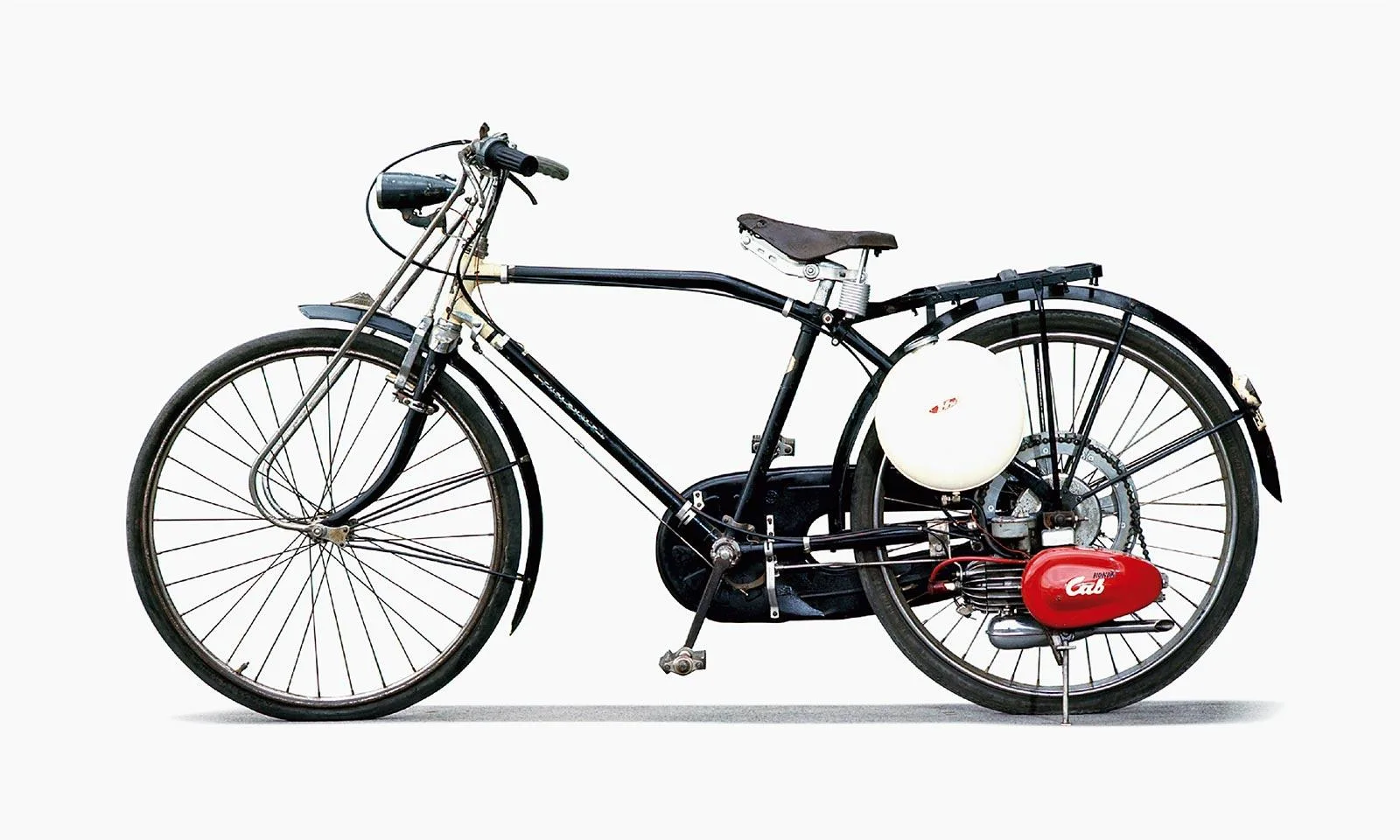
This was long before computerized mailing lists. Tens of thousands of addresses had to be written by hand. Honda employees helped, freelance clerks helped, and even employees from Mitsubishi Bank reportedly joined the effort.
It was the same kind of work Fujisawa had once done as a young man. This time, though, it was helping build a national sales network.
More than 30,000 bicycle shops replied, and thousands eventually became outlets for the Cub F-Type. A man who knew little about designing motorcycles had dramatically expanded Honda's reach using paper, ink and an understanding of how ordinary people actually bought transportation.
One Man Kept Honda Alive. The Other Kept Dreaming Bigger.
The partnership worked because Honda and Fujisawa did not need to think alike. In fact, Honda's ambitions sometimes bordered on reckless.
In 1952, Honda committed the company to an enormous investment in imported machine tools—far beyond the company's capitalization at the time. Two years later, Honda was in serious financial trouble. Products were struggling, bills were coming due, and the company desperately needed time.
This was Fujisawa's side of the business. He worked with suppliers and banks to keep the company moving while Honda and his engineers dealt with the motorcycles. He asked suppliers for patience, opened the books to Mitsubishi Bank and focused on keeping the organization alive long enough to recover.
During that same crisis, Soichiro Honda announced something that must have sounded completely insane: Honda was going to compete in the Isle of Man TT.
The company was fighting to survive at home, yet its founder was already talking about beating the world's best motorcycle manufacturers. Somehow, both men were right. Fujisawa kept Honda alive long enough for Soichiro's ambitions to become possible.
The Super Cub
Their partnership may be best represented by the motorcycle that followed.
The Honda Super Cub wasn't simply an engineering project. Fujisawa helped define the customer Honda needed to reach. The new machine had to be approachable, inexpensive to operate and easy to use even for people who did not think of themselves as motorcycle riders.
Soichiro Honda and his engineers figured out how to turn that idea into a machine.
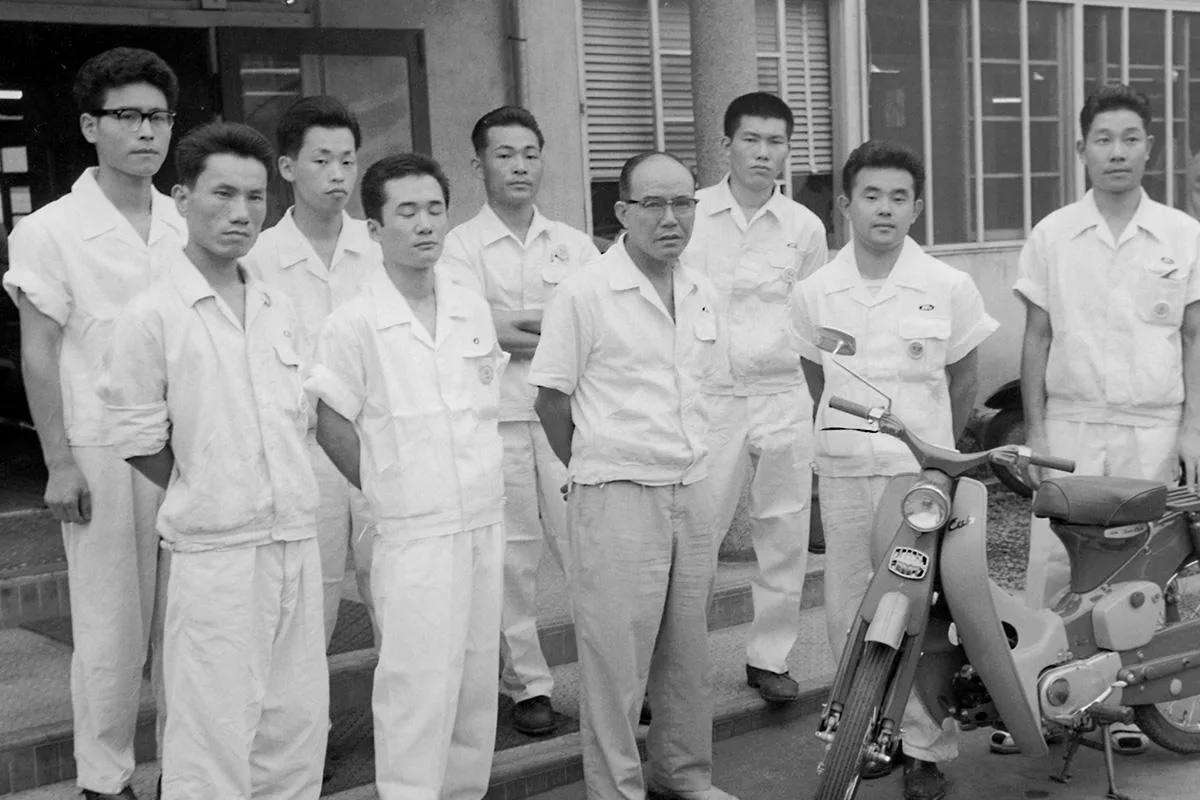
When discussing its potential, Fujisawa predicted that Honda could eventually sell 30,000 Super Cubs a month. At the time, motorcycle sales across all of Japan were only about 40,000 a month, so the prediction sounded absurd.
Eventually, it proved conservative.
In 2017, worldwide Super Cub production surpassed 100 million units, making it the most-produced motor vehicle in history. It remains perhaps the clearest example of how Honda and Fujisawa complemented one another: one understood how to build the machine, and the other understood who should want it.
Then Fujisawa Crossed the Line
For roughly twenty years, the arrangement held. Fujisawa could influence what customers needed, how Honda would sell it and how the company would operate, but he did not tell Soichiro Honda how to engineer.
Then came the Honda 1300.
Soichiro Honda was deeply committed to air-cooled engines. His reasoning wasn't entirely irrational. A water-cooled engine ultimately transfers heat to the air anyway, so Honda believed the additional complexity of water cooling could be avoided.
For motorcycles, Honda had built an empire around air-cooled engines. Automobiles, however, presented different problems. The Honda 1300 became increasingly difficult to develop, with heat, noise, constant design revisions and the founder's personal involvement creating enormous pressure inside Honda's engineering organization.
Some of Honda's engineers believed the company's future automobiles needed to be water-cooled. The problem was that almost nobody could tell Soichiro Honda he was wrong.
Eventually, the engineers went to Fujisawa.
For perhaps the most important time in their partnership, Fujisawa stepped across the boundary the two men had respected for decades. According to Honda's own historical account, he confronted Soichiro with a simple question:
Did he want to remain at Honda as its president—or as an engineer?
After a pause, Honda chose president.
That answer gave the younger engineers room to move forward. Honda began developing water-cooled automobiles, and the Honda Civic arrived in 1972.
The importance of that moment went far beyond cooling systems. Honda Motor Company had successfully done something extremely difficult for any founder-led organization: it had learned how to disagree with its founder.
Building a Honda That Didn't Need Honda
The water-cooling argument revealed something bigger. Honda Motor Company had become too large to depend forever on the instincts of one brilliant engineer.
Fujisawa had already spent years thinking about succession and developing younger leadership. Honda R&D had been separated from the parent company, giving engineers greater independence and helping create an organization that could eventually function without relying on one man's genius.
Then, in 1973, Fujisawa decided it was time to leave. When Soichiro Honda learned that Fujisawa intended to retire, he reached the same conclusion.
The two men stepped down together.
Both took lifetime posts as Supreme Advisors, and neither installed a family member as his successor. Instead, 45-year-old Kiyoshi Kawashima became Honda's second president.
That choice mattered. Honda would not become a family dynasty built around the founder's descendants. The organization would belong to the people capable of leading it next.
Soichiro Honda's own son, Hirotoshi, went on to establish Mugen rather than inherit a place at his father's company. The founders had spent twenty-five years building Honda. Their final act was getting out of its way.
“It Was All Right”
Honda's own history records one remarkably understated exchange between the two men after the decision to retire.
Looking back at what they had done, Honda said:
“It was all right.”
Fujisawa answered:
“Yes, it was all right.”
For two men who had once spent night after night talking about what Honda might become, there wasn't much more to say. They had already built it.
Takeo Fujisawa died in 1988. When Soichiro Honda was inducted into the Automotive Hall of Fame the following year, he went to visit Fujisawa's grave in Japan. Honda died in 1991.
More than three decades later, in 2023, Takeo Fujisawa finally joined him in the Automotive Hall of Fame. It was fitting recognition for a man whose name never appeared on the machines but whose influence was woven into the company that produced them.
Soichiro Honda built extraordinary products. Takeo Fujisawa helped create the organization capable of selling them, financing them, protecting the people who developed them—and eventually surviving without the man whose name was on the building.
That may be the most important thing the two of them built together.
Honda became bigger than Honda.
Photos: Honda Motor Co.